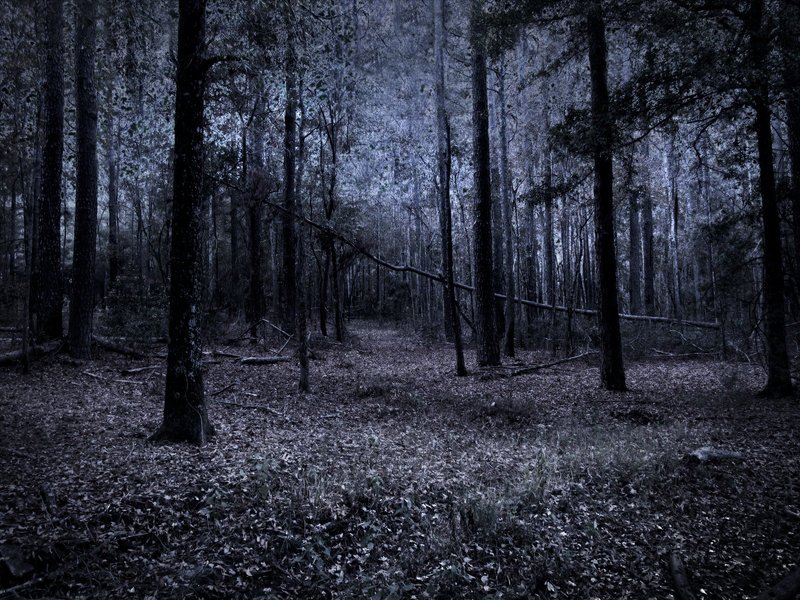
The rustle in the woods, the fleeting shadow, the inexplicable sound at night—these moments of mystery have always captivated us. But recently, reports of unexplained cryptid & creature sightings have surged across the United States, igniting a fresh wave of public fascination and debate. From the dense forests of the Pacific Northwest to the swamps of the South, ordinary individuals are reporting encounters that defy conventional explanation, challenging our understanding of the natural world and pushing the boundaries of what we believe is possible.
Are these encounters hoaxes, simple misidentifications, or tantalizing glimpses of species yet to be discovered? Whatever your stance, the phenomenon demands a closer look.
At a Glance: What You'll Learn About Unexplained Sightings
- The "Why" Behind the Surge: Explore why mysterious creature sightings are increasingly reported across America.
- Common Explanations: Understand how misidentification, hoaxes, and cultural beliefs often shape these encounters.
- The World of Cryptozoology: Get insight into the field dedicated to finding unproven animals.
- America's Iconic Cryptids: Dive into the lore of Bigfoot, Mothman, Chupacabra, and the Jersey Devil.
- Expert Perspectives: See how zoologists, folklorists, psychologists, and others approach these phenomena.
- New Tech in the Hunt: Discover how advanced tools are changing the search for elusive creatures.
The Enigma Unfolds: What's Driving the Surge?
Imagine hiking a familiar trail, only to catch a glimpse of a towering, shadowy figure disappearing into the trees. Or perhaps you're driving on a quiet rural road when a massive, winged being with glowing eyes crosses your path. These aren't scenes from a horror movie; they're the types of reports that have become surprisingly common, fueling a noticeable increase in unexplained creature sightings across the nation.
This surge isn't confined to a single region; it's a nationwide phenomenon, with reports flowing in from diverse landscapes. From the misty mountains of Washington state to the sun-baked deserts of Arizona, and through the humid backwoods of the Deep South, people are encountering creatures that simply don't fit into our established scientific catalog. These accounts, often shared by credible, ordinary individuals, force us to consider: what exactly are people seeing, and why are these stories becoming more prevalent now? The answer is rarely simple, often blending psychology, folklore, and genuine mystery.
Beyond the Shadows: Explaining the Unexplained
When a strange creature sighting hits the headlines, it's easy to jump to conclusions. But before we imagine a world teeming with undiscovered monsters, it’s crucial to explore the most common, and often perfectly logical, explanations. Understanding these potential interpretations helps us approach each report with a healthy dose of critical thinking, separating genuine anomalies from understandable human error.
Misidentification: The Usual Suspect
Let's be honest: our eyes can play tricks on us, especially when we're in unfamiliar territory, under pressure, or facing less-than-ideal viewing conditions. Misidentification remains the most frequent explanation for cryptid sightings. A familiar animal, seen briefly or in poor light, can easily be misinterpreted as something extraordinary.
Consider how a black bear, standing on its hind legs or moving through dense foliage, might be mistaken for Bigfoot. Its size and bipedal stance, even if temporary, can conjure the image of a giant ape-like creature. Similarly, a group of otters swimming in formation or a large sturgeon breaching the surface could easily be perceived as a terrifying lake monster. Feral cats, often larger and wilder than domestic pets, can be confused with large, predatory felines in some regions. Even common raptors, like eagles or owls, seen at dusk or in silhouette, might be described as massive "thunderbirds" with impossible wingspans.
The Chupacabra, particularly its modern canid form, is a prime example of misidentification. Reports of hairless, four-legged creatures with spinal ridges are often attributed to coyotes or dogs suffering from severe mange. The disease strips them of their fur, alters their skin, and can make them look remarkably alien and menacing. Oarfish or eels, with their elongated bodies, can also spark tales of sea serpents when glimpsed at a distance in murky waters.
Beyond animal confusion, psychological factors are at play. Pareidolia, our brain's tendency to see patterns (like faces or figures) in random stimuli, can turn an oddly shaped stump, a rock formation, or even a cloud into something fantastical. Optical illusions, poor visibility, and the stress of an unexpected encounter further heighten the chances of misinterpreting what's truly there.
The Realm of Cryptozoology: Seeking Undiscovered Life
For many, the idea that all sightings can be explained away by misidentification simply isn't satisfying. This is where cryptozoology steps in. Operating at the fascinating intersection of zoology and folklore, cryptozoology is a field dedicated to the search for "cryptids"—animals whose existence remains unproven by mainstream science. Think Bigfoot, the Loch Ness Monster, or the Yeti.
Proponents of cryptozoology believe that vast, underexplored regions of the world, from deep oceans to dense jungles, could still harbor elusive species unknown to science. Cryptozoologists approach their quest by meticulously collecting eyewitness accounts, investigating physical evidence such as tracks, hair samples, scat, or blurry photographs and videos. They conduct fieldwork, often venturing into remote areas, and delve deeply into local folklore and legends for clues. While their work can be passionate and thorough, it often operates outside the rigorous empirical standards and peer-review processes demanded by mainstream zoological science. The burden of proof in this field is exceptionally high, and undisputed evidence remains elusive.
The Human Element: Deliberate Hoaxes & Fabricated Evidence
Not every mysterious sighting is a genuine misinterpretation or a cryptozoologist's dream. Unfortunately, a significant portion of cryptid history is littered with deliberate hoaxes. These fabrications are often designed to deceive for personal gain, fame, or simply amusement, and they play a powerful role in perpetuating myths and muddying the waters for serious investigation.
Perhaps the most famous example is the "Surgeon's Photograph" of the Loch Ness Monster. For decades, this iconic image—a serpentine neck emerging from the water—was presented as definitive proof of Nessie's existence. It wasn't until 1994 that the hoax was fully exposed, revealing it to be a toy submarine with a carved head attached. Another historical example is the "Feejee Mermaid," a grotesque taxidermy creation displayed by P.T. Barnum in the 19th century, which was actually the head and torso of a monkey sewn onto the body of a fish.
These hoaxes, whether simple pranks or elaborate schemes, highlight the human capacity for imagination and mischief. They remind us to approach any "evidence" with a healthy dose of skepticism, especially when sensational claims are made without verifiable, independent corroboration.
Whispers in the Wind: Cultural Impact and Folklore
Beyond the physical reality of what people might or might not be seeing, cryptids hold a profound place in our collective consciousness. They represent something deeper than just a potential biological discovery; they embody the untamed wild, our primal fears, and even societal anxieties. These creatures are woven deeply into American folklore and identity, acting as modern myths in a rapidly changing world.
From Native American legends of forest giants to colonial tales of monstrous beings in the wilderness, cryptids provide a tangible form for the unknown. They can serve as cautionary tales, reflections of environmental concerns, or simply as symbols of mystery in an increasingly explored and documented world. Their stories allow us to confront our discomfort with what lies beyond our control, giving voice to our collective wonder and dread. When we talk about Bigfoot, we're not just discussing a potential ape; we're talking about the last vestiges of wilderness, the fear of the unknown lurking just beyond the campfire's glow.
America's Most Wanted: Iconic Cryptid Cases
Across the United States, certain cryptids have transcended mere local legends to become household names, each with a rich history of sightings, fervent believers, and persistent skeptics. These are the creatures that have captured our imaginations and continue to spark expeditions, documentaries, and countless late-night discussions.
Bigfoot/Sasquatch: The Forest Giant
No American cryptid holds more enduring appeal than Bigfoot, often known by its indigenous name, Sasquatch. Described as a 7-10 foot tall, bipedal, ape-like hominid covered in dark hair, this elusive creature is primarily reported in the dense, old-growth forests of the Pacific Northwest. Stories of large, hairy wildmen have existed for centuries among various Native American tribes, lending a deep historical root to the legend.
The most iconic piece of evidence, and arguably the most intensely debated, is the Patterson-Gimlin Film. Shot on October 20, 1967, by Roger Patterson and Robert Gimlin at Bluff Creek, California, this short 59-second film purportedly shows a bipedal, ape-like figure (dubbed "Patty") walking gracefully before glancing back at the camera and disappearing into the woods. For decades, its authenticity has been a battleground:
- Proponents point to the creature's natural gait, musculature, and apparent anatomical features as being too complex for a person in a suit, especially for the technology available in 1967. They highlight the difficulty of faking such a convincing movement in the wilderness.
- Skeptics argue it's a clever hoax, citing the figure's bulky appearance and the ease with which costumes could be manufactured. In 2004, Bob Heironimus claimed he was the man in the suit, a claim that remains controversial and has not been definitively proven.
Regardless of its authenticity, the Patterson-Gimlin Film remains central to Bigfoot lore, a perpetual motion machine for the debate between belief and skepticism. The legend of Bigfoot continues to thrive, with new footprint casts, audio recordings, and blurry photos periodically emerging from the wilderness, keeping the dream of discovering a giant hominid alive.
Mothman: The Winged Omen of Point Pleasant
From the dark forests to the night skies, the tale of Mothman offers a chilling contrast to Bigfoot's earthy mystery. This cryptid is forever linked to Point Pleasant, West Virginia, where it was extensively reported from November 1966 to December 1967. Witnesses described Mothman as a large, winged humanoid, often 6-8 feet tall, with a massive wingspan and piercing, glowing red eyes located on its chest, not its head. It was often said to fly silently and rapidly.
The sightings abruptly ceased after a tragic event: the Silver Bridge collapse on December 15, 1967. This disaster, which claimed the lives of 46 people when the suspension bridge over the Ohio River failed, cemented Mothman's terrifying reputation as a harbinger of doom. Theories abound, from the creature being an alien, a mutant bird, or even an interdimensional being, to the idea that it was a supernatural entity attempting to warn the town of impending disaster. The Mothman legend is a potent blend of folklore, eyewitness accounts, and a real-life tragedy, leaving an indelible mark on American paranormal culture.
Chupacabra: The Goat-Sucker's Evolution
The Chupacabra, Spanish for "goat-sucker," is a creature that burst onto the scene in the 1990s in Puerto Rico, quickly spreading to Mexico and the Southwestern United States. Its infamous name comes from its alleged habit of draining the blood of livestock, particularly goats, leaving behind peculiar puncture wounds.
Initially, the Chupacabra was described as a truly bizarre creature: a reptilian, bipedal being with grey-green skin, glowing red eyes, and a row of spines running down its back. This original description painted a terrifying, almost alien-like picture. However, as sightings moved north into Texas and Arizona, the description evolved significantly. The "modern" Chupacabra is more often depicted as a hairless, four-legged canine with a distinctive spinal ridge and prominent fangs.
This shift in description strongly supports the theory that many modern Chupacabra sightings are, in fact, coyotes or dogs suffering from severe cases of sarcoptic mange. The disease causes intense itching, leading to hair loss, thickened skin, and a gaunt appearance that can easily be mistaken for something otherworldly, especially to an uninitiated observer. While the initial Puerto Rican reports remain harder to explain away, the contemporary Chupacabra often highlights the power of misidentification in perpetuating cryptid myths.
The Jersey Devil: A Colonial Nightmare
One of America's oldest and most deeply rooted legends hails from the dark, eerie depths of New Jersey's Pine Barrens: the Jersey Devil, also known as the Leeds Devil. Its origins trace back to 18th-century folklore, centered around the infamous "Mother Leeds." The tale claims she was a local woman who, having already given birth to 12 children, cursed her 13th pregnancy, declaring that if she had another child, "let it be a devil!" The story goes that the child was born a monstrous creature with leathery, bat-like wings, a horse-like head, and a forked tail, which promptly escaped into the desolate Pine Barrens.
For centuries, the Jersey Devil has been blamed for livestock attacks, strange noises, and terrifying encounters in the desolate South Jersey wilderness. The legend reached a fever pitch in January 1909, when a major sighting flap occurred. Over a single week, thousands of reports poured in from across the Delaware Valley, involving everyone from postmasters and police officers to prominent citizens. Witnesses claimed to see a flying creature matching the traditional description, leaving behind distinctive tracks in the snow. This intense period of sightings cemented the Jersey Devil's place in American lore, transforming a local legend into a widely recognized symbol of the unexplained.
A Spectrum of Scrutiny: How Experts See Cryptids
The fascinating world of cryptids attracts attention from various academic and scientific fields, each offering a unique lens through which to examine these unexplained sightings. Understanding these perspectives helps paint a fuller picture, moving beyond simple belief or disbelief.
Zoology: The Call for Concrete Proof
For zoologists, the scientific community's gatekeepers of animal life, the approach to cryptids is necessarily rigorous and grounded in empirical evidence. They operate under the principle that "extraordinary claims require extraordinary evidence." For a large, undiscovered species to be acknowledged, zoology demands:
- Robust Empirical Evidence: This means a specimen – a body, bones, or verifiable DNA – not just anecdotes.
- Peer-Reviewed Studies: Research must be replicable, testable, and stand up to the scrutiny of other scientists.
- Clear, Unambiguous Photos/Videos: Evidence that cannot be explained away by known animals or hoaxes.
From a zoological standpoint, most cryptid sightings are attributed to misidentification of known animals (as we discussed earlier) or deliberate hoaxes. The existence of large, uncataloged animals in well-explored regions is considered highly improbable given the extent of biological surveys and monitoring technologies available today.
Folkloristics: Tales, Traditions, and Anxieties
In contrast to zoology's material focus, folkloristics examines cryptids as a powerful and evolving form of modern folklore. Folklorists aren't primarily concerned with whether a creature physically exists, but rather what its story tells us about human culture. They analyze:
- Cultural Significance: What meaning does the creature hold for communities?
- Origins and Evolution: How did the stories begin, and how have they changed over time?
- Reflection of Human Anxieties: How do cryptids symbolize fears of the unknown, environmental concerns, or societal tensions?
For folklorists, Bigfoot isn't just a potential ape; it's a living myth, representing our relationship with wilderness, our desire for primal mysteries, and the enduring human need to tell stories about what lies beyond the edges of the map. They study the narratives themselves, their transmission, and their powerful role in shaping local identity and collective memory.
Psychology: The Mind's Role in Perception
Psychology delves into the cognitive and social factors that influence why people see what they see and believe what they believe. This field helps us understand the human element behind cryptid sightings, exploring:
- Misidentification due to Poor Conditions: How low light, distance, or rapid movement can distort perception.
- Emotional States: Fear, excitement, or stress can significantly alter what a person "sees."
- Cognitive Biases:
- Pareidolia: Seeing familiar patterns (like a face or figure) in random or ambiguous stimuli.
- Confirmation Bias: The tendency to interpret new information in a way that confirms one's existing beliefs.
- Memory Distortion: How memories of an event can change over time, especially under the influence of retelling or group dynamics.
- Group Dynamics: How shared experiences and beliefs can reinforce sightings within a community.
Psychologists remind us that our brains are constantly trying to make sense of the world, and sometimes, in ambiguous situations, they fill in the blanks with what we expect or fear, rather than what's objectively present.
Sociology: Society's Mirror
Similar to folkloristics, sociology looks at cryptids from a broader societal perspective, analyzing how belief in these creatures reflects social dynamics and group identity. Sociologists might examine:
- Group Identity: How cryptid lore can foster a sense of community or belonging among believers.
- Cultural Resistance: How belief in unproven creatures can represent a pushback against mainstream scientific explanations or dominant cultural narratives.
- Connections to Local Landscapes and Histories: How cryptids are deeply tied to specific geographical areas and the unique histories of the people who live there.
Sociologists might explore how the Bigfoot phenomenon, for example, connects to a desire for wilderness preservation or a romanticized view of frontier life in America. They see cryptids as part of the social fabric, not just biological puzzles.
Cryptozoology: On the Hunt for the Hidden
As discussed earlier, cryptozoology stands apart as the field actively investigating these phenomena with the goal of proving the cryptids' existence. While often operating outside mainstream scientific validation, cryptozoologists:
- Investigate anecdotal reports and eyewitness accounts.
- Analyze photographic, video, and physical evidence (e.g., tracks, hair samples).
- Conduct field expeditions in potential habitats.
Despite the skepticism from mainstream science, cryptozoologists hold a firm belief that undiscovered species—especially large, elusive ones—may still exist, awaiting definitive proof. They are the optimists in the cryptid debate, driven by the thrill of potential discovery.
The Hunt Continues: New Tools in the Search
The quest for definitive proof of cryptids, or at least a better understanding of unexplained sightings, is evolving with advancements in technology. Gone are the days of relying solely on blurry photos and plaster casts. Modern researchers and enthusiasts are now deploying sophisticated tools that can explore remote areas and gather data with unprecedented precision.
- Advanced Camera Traps: These are not your average trail cameras. High-resolution, motion-activated, and often infrared-capable, these cameras can be deployed for long periods in remote locations. Some models now integrate AI detection, which can distinguish between known animals and potentially unusual movements, reducing false positives. They offer a passive yet persistent way to monitor vast stretches of wilderness.
- Drone Footage: Unmanned Aerial Vehicles (UAVs) equipped with high-definition cameras, thermal imaging, and even Lidar (Light Detection and Ranging) technology are revolutionizing how inaccessible terrains are surveyed. Drones can quickly cover areas that would take humans weeks to traverse, providing aerial perspectives that might reveal hidden trails, nests, or even the creatures themselves from a safe distance. Their thermal capabilities can detect heat signatures day or night, offering a new dimension to nocturnal searches.
- Environmental DNA (eDNA) Analysis: This cutting-edge technique involves collecting environmental samples like water, soil, or even air, and then analyzing them for genetic material shed by organisms. Without needing direct observation, eDNA can identify species present in an ecosystem simply by detecting their DNA fragments (from skin cells, feces, or hair). For cryptids, this means collecting a water sample from a lake could potentially reveal the presence of an unknown aquatic creature's DNA, offering molecular proof of its existence.
- Acoustic Monitoring: Sophisticated, long-range microphones and audio recorders can be deployed to capture unusual vocalizations in the wilderness. These devices can operate autonomously, recording sounds over extended periods and differentiating between known animal calls, human activity, and any anomalous acoustic signatures that might suggest an unknown species.
- Satellite Imagery and GIS (Geographic Information Systems): These tools allow researchers to analyze vast habitats and potential hidden areas from orbit. By mapping topography, vegetation density, water sources, and human presence, they can identify prime, undisturbed locations where a large, elusive creature might realistically hide. GIS can also track patterns in sightings, helping to pinpoint high-activity zones for focused field research.
These technologies, combined with careful methodology, offer new hope for evidence-based investigations into unexplained sightings. While no definitive proof of a cryptid has emerged through these methods yet, they represent the most scientifically robust approach to date, moving the discussion forward from pure anecdote to data-driven inquiry. You can Explore unspeakable videos that claim to capture cryptids, but remember to apply critical thinking.
Why We Keep Looking: The Enduring Allure of the Unknown
Despite the scientific skepticism that demands extraordinary evidence, public interest in unexplained cryptid and creature sightings remains incredibly high. This enduring fascination isn't just about sensationalism; it taps into something deeper within the human psyche.
Part of the allure lies in the sheer mystery of it all. In an increasingly mapped, documented, and digitally connected world, the idea that genuinely unknown creatures could still exist offers a powerful antidote to mundane reality. It's the hope of discovery, the tantalizing possibility that there are wonders yet to be found, right in our own backyards. This desire to confront the untamed wild, to peer into the last remaining corners of the unknown, is a fundamental human drive.
Media amplification plays a significant role in sustaining this interest. Documentaries, podcasts, news reports, and viral social media content constantly reintroduce these stories to new audiences, shaping perceptions and fueling the debate between belief and skepticism. Every blurry photo or unexplained sound reignites the conversation, keeping the legends alive and encouraging more people to look closer at the shadows.
Whether you're a staunch skeptic or a hopeful believer, the world of cryptids offers a compelling narrative about our relationship with nature, the limits of our knowledge, and the enduring power of a good mystery. It's a reminder that sometimes, the most interesting answers are the ones we haven't found yet.
Your Role in the Mystery: What to Do If You See Something Unexplained
If you find yourself face-to-face with an unexplained creature, your reaction will likely be a mix of shock, fear, and wonder. While the experience can be overwhelming, a few key actions can help contribute valuable (and credible) information to the ongoing discussion about cryptids.
- Prioritize Safety, Then Document: Your personal safety is paramount. If the creature appears threatening or too close, retreat to safety. Once you are safe, try to document the encounter as best you can.
- Photographs or Video: Use your phone or camera immediately. Even a blurry image or a short clip can offer valuable clues, especially if it captures unique features or behavior.
- Audio Recording: If you can't get a visual, try to record any unusual sounds or vocalizations.
- Take Notes: As soon as possible, write down everything you remember: the exact time, date, location (GPS coordinates if possible), weather conditions, a detailed description of the creature (size, color, features, movement), what it was doing, and how long the sighting lasted.
- Look for Physical Evidence: If it's safe to do so, check for any physical signs the creature might have left behind.
- Tracks: Look for footprints, paw prints, or any disturbance in the ground. Photograph them with a ruler or common object (like a coin) for scale, and consider making a cast if you have the materials.
- Hair or Scat: Collect any unusual hair samples (using gloves or tweezers) or droppings. Place them in a clean, sealed bag.
- Other Disturbances: Broken branches, claw marks, or unusual smells.
- Be Critical, Even of Your Own Experience: It's natural to be excited or frightened, but approach your own sighting with a critical eye. Reconsider if there's a known animal or object that could explain what you saw. Discuss it with trusted individuals, but be wary of exaggerating details or allowing others to influence your memory.
- Report to Reputable Organizations: Once you've documented your sighting, you can report it to organizations that collect such data.
- For Bigfoot sightings, groups like the Bigfoot Field Researchers Organization (BFRO) maintain extensive databases.
- Local wildlife departments might be interested in reports of unusual animal behavior, even if they're skeptical of cryptids.
- Paranormal researchers or cryptozoological groups in your region might also be interested in your account.
- Stay Grounded: Remember that many sightings have logical explanations. While the allure of the unknown is powerful, maintaining a balanced perspective helps advance genuine understanding, whether that leads to the discovery of a new species or a deeper appreciation for the mysteries our natural world already holds.